Water Quality Monitoring in six municipalities of Thessaly, Greece, a year after Daniel storm!
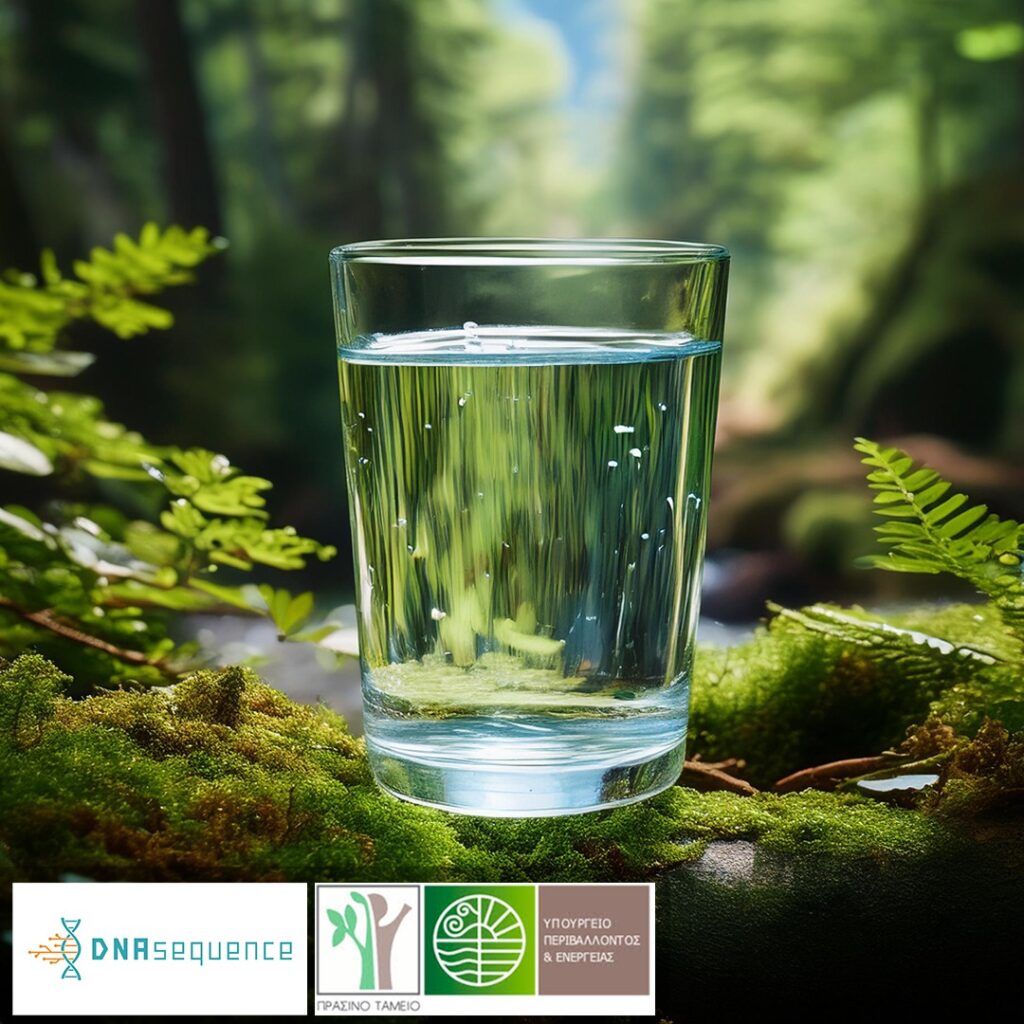
DNA Sequence is pleased to announce the completion of a metagenomics water quality monitoring project in the areas of Trikala, Karditsa, Farssala, Kileler, Agia and Tempi, Thessaly, Greece. The project was funded by the Ministry of Environment & Energy and the Green Fund. The project aimed to evaluate the presence of pathogens in the water supply network of Trikala, Karditsa, Farssala, Kileler, Agia and Tempi Municipal Water Supply and Sewerage Companies, that may have been adversely affected by the floodings during the last year’s Daniel storm.
DNASequence is currently conducting a novel project in cooperation with DEYAR

DNASequence is currently conducting a novel project. In cooperation with the Municipal Water Supply & Sewerage Company of the Municipality of Rhodes (DEYAR), DNASequence will apply its technology to monitor the Microbiome in Surface Water and Irrigation Systems of the affected areas by the fire of 18th -7-2023 in the island of Rhodes.
DNA sequence is pleased to announce its collaboration with EYDAP

DNASequence is pleased to announce the launch of a new water Biomonitoring pilot project in collaboration with EYDAP. The application, which focuses on the detection of somatic coliphage viruses in non-treated water, is aligned with the new requirements on water safety as defined by the revised EU (2020/2184) drinking water directive and constitutes the first such application for Greece.
Cooperation of Constrat and DNA Sequence for Water Biomonitoring

Safe and readily available water is important for public health, whether it is used for drinking, domestic use, food production or other purposes. Improved water supply and sanitation in drinking and wastewater treatment plant network, and better management of water resources, can enhance a country’s economic growth. Therefore, the detection and monitoring of all factors, infectious or not, is necessary to ensure public health as well as to improve the supply of high quality water. CONSTRAT LTD is a company focused on water and wastewater industry. The use of state-of-the-art metagenomics and bioinformatics technologies by DNA Sequence SRL Hellas is applicable, inter alia, to the bio-monitoring of drinking water supply systems and biological treatment plants. The cooperation agreement between the two companies is the beginning for the application of innovative bio-monitoring technologies in water supply systems and wastewater treatment plants throughout the country. The pilot – project started with two drinking water supply systems and two biological treatment plants in Aigio, Achaia and Aghios Nikolaos, Crete. The implementation process includes: -the design and development of sampling procedures -the design and elaboration of the isolation and analysis of the genetic material (DNA) of the samples – bioinformatics analysis of the data -the interpretation of the extracted results and their distribution to the stakeholders The sampling took place in April 2021 by specialized personnel of DNA Sequence and Constrat with guidance at the sampling points by personnel of the municipalities of Aigio and Aghios Nikolaos respectively. For the water supply network, water samples were collected from representative points throughout the network “from source to tap” (boreholes, tanks, settlements’ faucets), while for the biological treatment plant water samples were collected from its entrance and exit to the unit, as well as from all the intermediate stages of treatment. The samples were transferred to the DNA Sequence laboratory where the genetic material (DNA) for each sample was isolated and sequenced. Laboratory analysis of all samples was based on WGS (Whole Genome Sequencing) and 16S rRNA technology which are important tools for the determination of microbial communities in water and wastewater. DNA sequencing was performed using Oxford Nanopore Technologies (ONT) nanofilm technology. The large volume of data (raw data) was processed and analyzed through the company’s bioinformatics platform so that the results are available for quality evaluation. At the end of the procedures, all the information about the project implementation process was communicated to the interested parties via a report. The results were then presented to the stakeholders with the help of a user-friendly online interactive platform, in which the user can navigate and explore the microbial biodiversity that characterizes the sampled point as well as get informed about the detected species (pathogenicity, biofilm formation trend, etc.). Constrat in turn, utilizing the produced results will reinforce and specialize its services in the field of water supply and wastewater systems. Regarding the results of the analysis, the quality of water reaching the consumer, the effectiveness of chlorination in selected points of the water network, the possibility of sludge bulking occurrence which is caused by the excessive growth of filamentous bacteria extending outside the flocs resulting in decreasing the wastewater treatment efficiency and deteriorating the water quality in the effluent, the comparison of the efficiency between the conventional activated sludge systems and the membrane bioreactors (MBR) methods, were also assessed. Conventional monitoring methods that target selected, well characterized microorganisms, in addition to the longer time required to yield results, exclude microorganisms that either cannot be cultured or do not pose a high health risk (e.g. unspecified or minor infectivity and/or pathogenicity). The complete metagenomics analysis, offered by DNA Sequence, enables the whole genome of all the microorganisms present in a sample to be sequenced, while through bioinformatics analysis it can distinguish species at strain level and even identify known genes for resistance to antibiotics. Therefore, the ability to detect the entire microbial spectrum in water and wastewater using methods of metagenomics technology comes to complement the already implemented necessary controls to ensure water high quality and safety. The result is to strengthen and expand the ability to make timely decisions where this is deemed appropriate not only to ensure public health but also the proper maintenance and performance of water supply facilities and wastewater treatment plants.
WATER QUALITY
1. Project Background and Description Bacterial microbes exist in every water system in the world. They are perfectly adapted to the environmental conditions, making the disinfection process a difficult task. As microbes grow, they attach themselves to wetted surfaces in the water distribution system. They protect themselves from disinfecting agents by forming biofilms. A biofilm contains a group of bacteria enveloped within a polymeric slime that ensures adhesion to the pipe surface. Thus, they are several hundred times more resistant to the action of various disinfectants and antibiotics than the same microorganisms grown in suspension. 3. Project Scope To explore the differences of microbial community structure in different water areas To study changes of water microbiota in diversity and abundance after certain treatment To determine the degree of water pollution and remediation actions 4. Technology We will define points of interest in cooperation with the local authorities to define the sampling strategy. Our proposal concerns a different number of samples from different sites at a specific time. The proposed solution based on Nanopore sequencing platforms we can not only help you identify the microorganisms presented in the water, but also analyze their diversity, abundance, and the relationship between the water environments and the microbiomes. Advanced bioinformatic analysis offers a method to examine the genetic diversity of environmental samples and to characterize sites in terms of relative abundance of bacteria, fungi, protists, viruses, antimicrobial resistance (AMR), and virulence associated genes. 5. Deliverables Final Reports will contain the following elements: Identification of water microorganisms Quantitation of water microorganisms Study the evolutionary relationship of water microorganisms Study the functions of microorganisms in the water environments Remediations actions to improve water quality.